
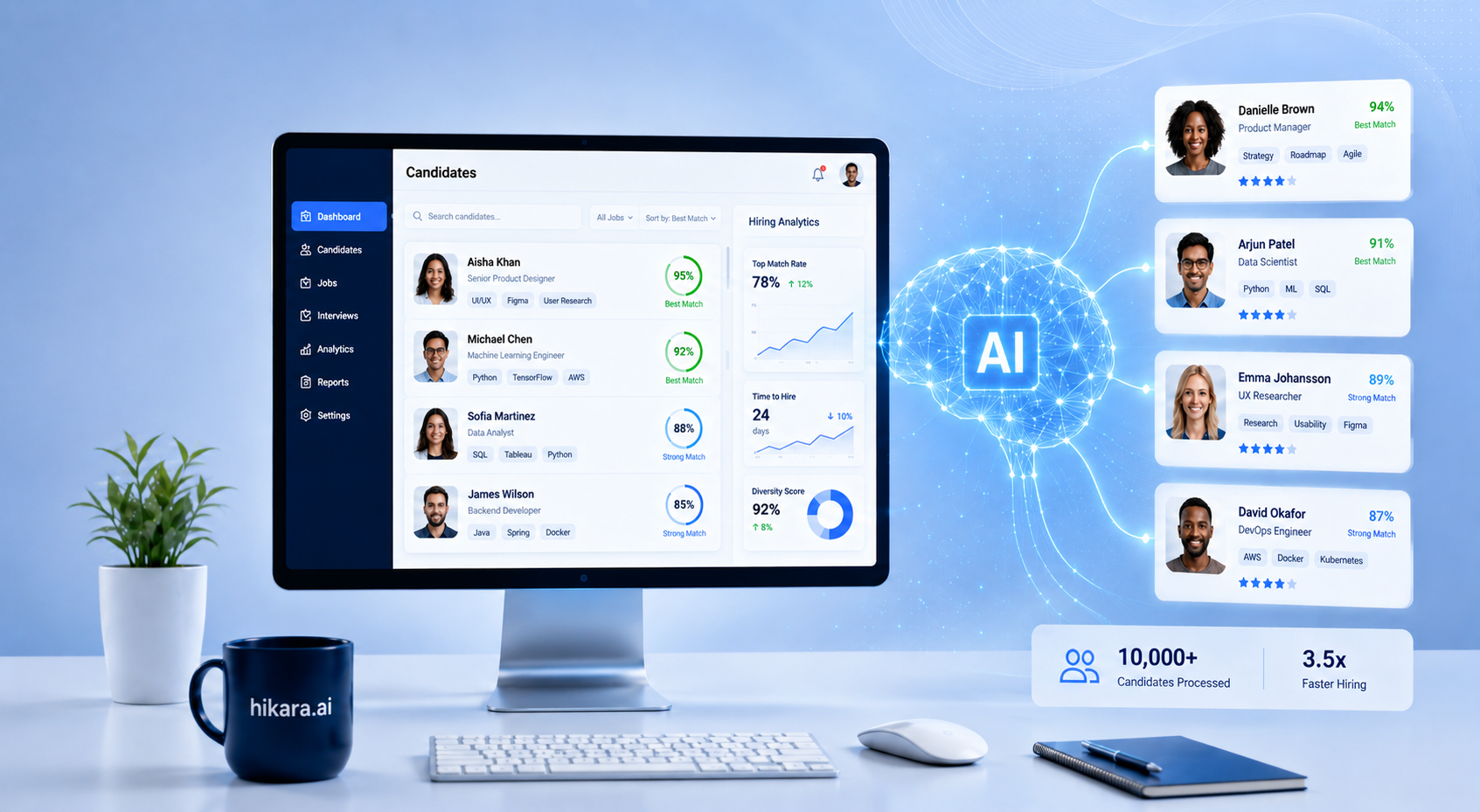
In today’s fast-paced digital economy, hiring the right talent is no longer just a human-driven process. Companies are increasingly turning to intelligent technologies to streamline recruitment, reduce bias, and make smarter hiring decisions. One of the most transformative tools in this space is AI recruitment software.
If you’re new to the concept, this guide will walk you through everything you need to know—from what AI recruitment software is, to how it works, its benefits, challenges, and how to get started.
Understanding AI Recruitment Software
AI recruitment software refers to tools and platforms that use artificial intelligence (AI) and machine learning (ML) to automate and enhance various stages of the hiring process. Instead of manually sorting resumes, scheduling interviews, or screening candidates, AI-powered systems handle these tasks quickly and efficiently.
At its core, AI recruitment software helps companies:
-
- Identify the best candidates faster
-
- Reduce manual workload for HR teams
-
- Improve hiring accuracy
-
- Enhance candidate experience
These systems analyze vast amounts of data to make predictions and recommendations, helping recruiters make better-informed decisions.
How AI Recruitment Software Works
AI recruitment tools rely on several advanced technologies working together. Here’s a simplified breakdown:
1. Resume Parsing and Screening
AI scans resumes and extracts relevant information such as skills, experience, education, and keywords. It then matches this data against job requirements to shortlist the most suitable candidates.
2. Natural Language Processing (NLP)
NLP allows the software to understand human language. This helps in analyzing resumes, cover letters, and even candidate responses in chatbots or interviews.
3. Predictive Analytics
AI systems use historical hiring data to predict which candidates are most likely to succeed in a role. This reduces guesswork and improves hiring quality.
4. Automation
From sending emails to scheduling interviews, AI automates repetitive tasks, freeing up recruiters to focus on strategic activities.
5. Candidate Engagement Tools
AI chatbots interact with candidates in real time, answering questions, collecting information, and guiding them through the application process.
Key Features of AI Recruitment Software
Most AI recruitment platforms offer a combination of the following features:
Intelligent Candidate Sourcing
AI tools search multiple platforms (job boards, social media, databases) to find potential candidates who match job requirements.
Automated Resume Screening
Quickly filters out unqualified applicants and highlights top candidates based on predefined criteria.
Chatbots for Communication
24/7 virtual assistants that engage candidates, answer FAQs, and schedule interviews.
Interview Scheduling
Automatically coordinates calendars between recruiters and candidates, eliminating back-and-forth emails.
Video Interview Analysis
Some advanced tools analyze facial expressions, tone, and word choice during video interviews to assess candidate suitability.
Bias Reduction Algorithms
AI can help minimize unconscious bias by focusing on skills and qualifications rather than demographic factors.
Analytics and Reporting
Provides insights into hiring metrics such as time-to-hire, cost-per-hire, and candidate drop-off rates.
Benefits of Using AI Recruitment Software
1. Faster Hiring Process
AI significantly reduces the time spent on screening and administrative tasks. What once took weeks can now be done in days or even hours.
2. Improved Quality of Hire
By analyzing data and patterns, AI helps identify candidates who are more likely to succeed in a role.
3. Cost Efficiency
Automation reduces the need for extensive manual labor, lowering recruitment costs over time.
4. Enhanced Candidate Experience
Quick responses, smooth communication, and faster decisions create a positive impression on candidates.
5. Reduced Bias
AI can help standardize evaluations, leading to fairer hiring decisions when properly designed and monitored.
6. Scalability
Whether you’re hiring for 10 positions or 1,000, AI systems can handle large volumes of applications effortlessly.
Common Use Cases
AI recruitment software is used across industries and company sizes. Here are some common scenarios:
-
- High-volume hiring (e.g., retail, customer support)
-
- Campus recruitment
-
- Tech hiring and skill-based roles
-
- Remote workforce recruitment
-
- Executive search support
Startups and enterprises alike benefit from the efficiency and insights provided by AI tools.
Challenges and Limitations
While AI recruitment software offers many advantages, it’s not without challenges:
Data Dependency
AI systems rely heavily on data. Poor-quality or biased data can lead to inaccurate recommendations.
Algorithmic Bias
If not carefully designed, AI can unintentionally replicate existing biases in hiring data.
Lack of Human Touch
Over-automation can make the hiring process feel impersonal if not balanced with human interaction.
Implementation Costs
Initial setup and integration with existing systems can require investment.
Compliance and Privacy Concerns
Handling candidate data requires strict adherence to data protection regulations.
AI vs Traditional Recruitment
| Aspect | Traditional Recruitment | AI Recruitment |
| Speed | Slow and manual | Fast and automated |
| Accuracy | Depends on recruiter | Data-driven insights |
| Cost | Higher long-term | More cost-efficient |
| Candidate Experience | Inconsistent | Streamlined and responsive |
| Scalability | Limited | Highly scalable |
AI doesn’t replace recruiters—it enhances their capabilities.
How to Choose the Right AI Recruitment Software
If you’re considering adopting AI recruitment tools, here are some factors to keep in mind:
Define Your Needs
Are you struggling with high application volumes? Slow hiring? Poor candidate engagement? Identify your pain points first.
Look for Key Integrations
Ensure the software integrates with your existing HR systems, such as Applicant Tracking Systems (ATS).
Evaluate Ease of Use
A user-friendly interface is crucial for quick adoption by your HR team.
Check Customization Options
The tool should adapt to your hiring workflows, not the other way around.
Review Data Security Measures
Make sure the platform complies with data protection standards and keeps candidate information secure.
Request Demos and Trials
Test the software before committing to ensure it meets your expectations.
Best Practices for Using AI in Recruitment
To get the most out of AI recruitment software, follow these best practices:
Combine AI with Human Judgment
Use AI for efficiency, but keep humans involved in decision-making.
Regularly Audit Algorithms
Check for biases and ensure fairness in hiring outcomes.
Train Your Team
Equip recruiters with the knowledge to use AI tools effectively.
Maintain Transparency
Let candidates know when AI is being used in the hiring process.
Continuously Optimize
Monitor performance metrics and refine your processes over time.
The Future of AI in Recruitment
AI in recruitment is still evolving, and its future looks promising. Here are some trends to watch:
Hyper-Personalized Candidate Experiences
AI will tailor job recommendations and communication based on individual preferences.
Advanced Skill Matching
Beyond resumes, AI will assess real-world skills through simulations and assessments.
Voice and Emotion Analysis
More sophisticated tools will evaluate communication styles and emotional intelligence.
Integration with Workforce Planning
AI will not only help hire talent but also predict future workforce needs.
Ethical AI Development
Greater focus on fairness, transparency, and accountability in AI systems.
Why Businesses Are Adopting AI Recruitment Software
Organizations today face intense competition for top talent. Traditional hiring methods often fall short in speed and efficiency. AI recruitment software offers a competitive edge by enabling:
-
- Faster decision-making
-
- Better talent matching
-
- Improved employer branding
-
- Data-driven hiring strategies
Companies that embrace AI are better positioned to attract and retain high-quality candidates.
Final Thoughts
AI recruitment software is transforming the way organizations hire talent. By automating repetitive tasks, providing data-driven insights, and enhancing candidate experiences, it empowers recruiters to focus on what truly matters—building strong teams.
For beginners, the key is to start small, understand your needs, and gradually integrate AI into your recruitment process. When used responsibly and effectively, AI can become a powerful ally in shaping the future of hiring.
As technology continues to evolve, businesses that adapt early will gain a significant advantage in the talent marketplace.
If you’re exploring AI-driven hiring solutions, platforms like Hikara.ai aim to simplify recruitment while maximizing efficiency and accuracy—helping organizations build smarter, faster, and more inclusive hiring processes.
Visit – https://www.hikara.ai/