
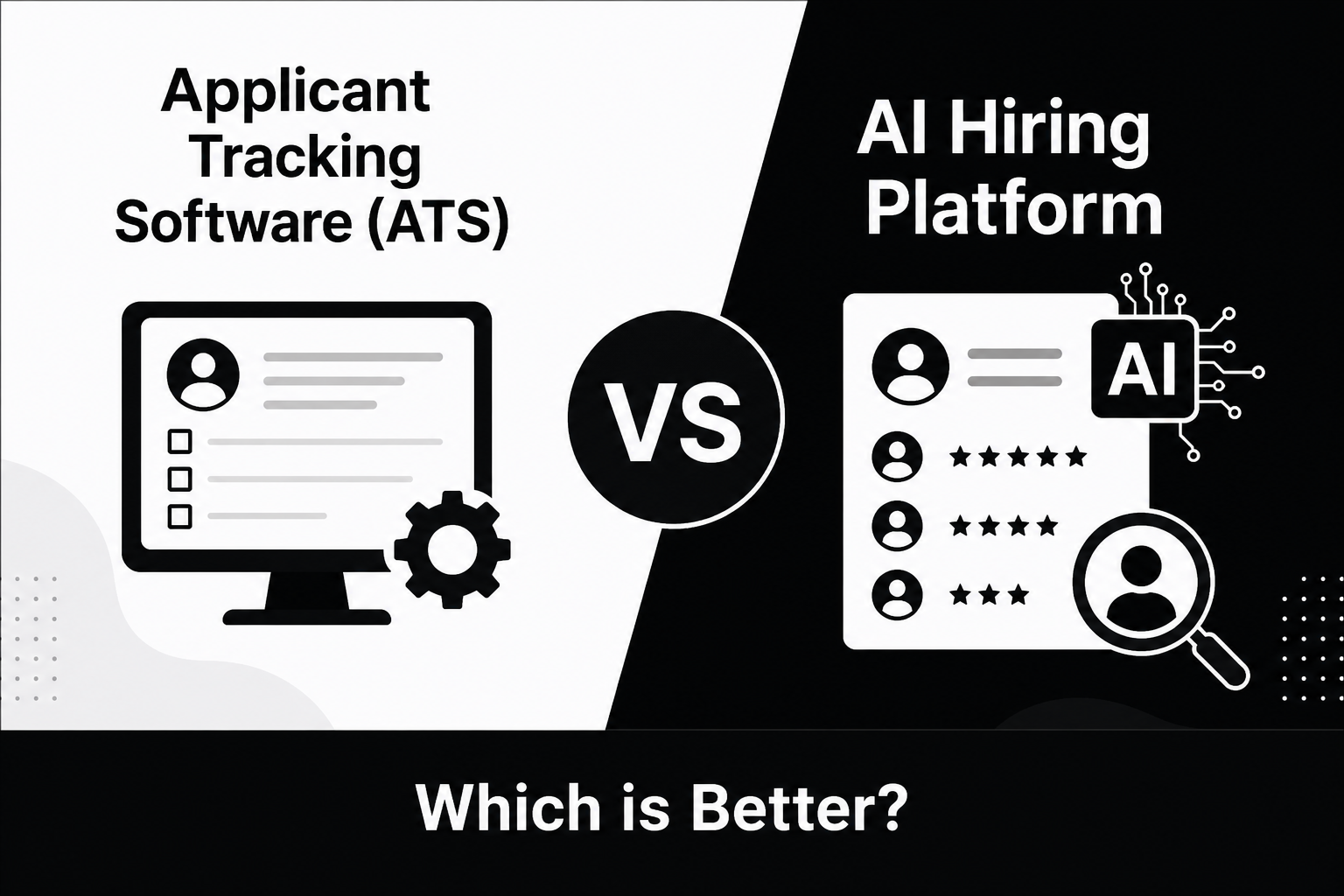
Hiring has changed dramatically over the last few years. Startups and growing businesses are no longer relying only on spreadsheets, emails, or traditional hiring systems to manage recruitment. Today, companies want faster hiring, better candidate quality, and smarter recruitment decisions. That’s where the debate between Applicant Tracking Software (ATS) and AI hiring platforms begins.
Many recruiters still use traditional ATS tools to organize applications, while modern businesses are shifting toward intelligent hiring systems powered by artificial intelligence. But which one is actually better for your business?
In this guide, we’ll compare Applicant Tracking Software and AI hiring platforms in detail, including features, benefits, limitations, and why modern businesses are increasingly choosing AI-powered hiring solutions like Hikara AI.
What is Applicant Tracking Software (ATS)?
An Applicant Tracking System (ATS) is software designed to help recruiters collect, organize, and track job applications throughout the hiring process.
Traditional ATS platforms mainly focus on:
- Resume storage
- Candidate tracking
- Job posting management
- Interview scheduling
- Hiring workflow management
ATS software acts like a digital database where recruiters can manage applications more efficiently than manual hiring methods.
Common Features of ATS Software
- Resume collection
- Candidate database management
- Workflow tracking
- Email communication
- Job posting integrations
- Interview scheduling
- Basic reporting
For many years, ATS solutions have been considered essential recruitment tools for businesses.
However, hiring needs have evolved.
Today’s recruiters need more than just applicant tracking—they need intelligent hiring automation.
What is an AI Hiring Platform?
An AI hiring platform uses artificial intelligence and automation to improve the entire recruitment process. Instead of simply storing resumes, AI-powered platforms actively analyze, rank, screen, and shortlist candidates based on skills, experience, and job fit.
Modern AI recruitment systems can:
- Automatically screen resumes
- Rank candidates intelligently
- Reduce manual hiring work
- Improve candidate matching
- Save recruitment costs
- Speed up hiring decisions
An AI hiring platform for startups is especially valuable because startups often have limited HR resources and need to hire quickly without compromising talent quality.
ATS vs AI Hiring Platform: Core Difference
The biggest difference is simple:
ATS Manages Applications
AI Hiring Platforms Make Hiring Smarter
Traditional ATS systems are mostly administrative tools, while AI hiring solutions actively help recruiters make better hiring decisions.
Here’s a quick comparison:
| Feature | Traditional ATS | AI Hiring Platform |
|---|---|---|
| Resume Storage | Yes | Yes |
| Candidate Tracking | Yes | Yes |
| AI Resume Screening | Limited | Advanced |
| Candidate Ranking | Basic | Intelligent |
| Automation | Minimal | High |
| Skill Matching | Manual | AI-Powered |
| Time Saving | Moderate | Significant |
| Hiring Accuracy | Average | Improved |
| Recruitment Insights | Basic | Advanced |
| Bias Reduction | Limited | Better Potential |
Why Traditional ATS Tools Are No Longer Enough
While ATS systems are useful, they often create challenges for modern recruiters.
1. Too Much Manual Work
Recruiters still spend hours reviewing resumes manually. An ATS stores applications but usually doesn’t intelligently shortlist the best candidates.
This becomes a major issue when companies receive hundreds or thousands of applications.
2. Slow Hiring Process
Traditional hiring workflows can delay recruitment decisions. Manual screening increases time-to-hire, which may cause companies to lose top talent to competitors.
3. Poor Candidate Matching
Many ATS systems rely heavily on keyword matching. This can overlook qualified candidates whose resumes don’t perfectly match specific keywords.
AI-driven systems analyze context, skills, experience, and relevance more effectively.
4. Limited Automation
Most ATS platforms automate only administrative tasks. They do not fully solve recruitment inefficiencies.
Modern businesses now want solutions that support how to automate hiring with AI rather than just digitizing old hiring processes.
Benefits of AI Hiring Platforms
AI recruitment technology is transforming how businesses hire talent.
Here’s why more companies are adopting AI-driven hiring systems.
1. Faster Resume Screening
An AI tool to shortlist candidates can analyze hundreds of resumes within minutes.
Instead of manually reading every application, recruiters receive a ranked list of the most suitable candidates.
This dramatically reduces hiring time.
2. Better Hiring Decisions
AI systems evaluate:
- Skills
- Experience
- Job relevance
- Career patterns
- Candidate compatibility
This improves recruitment quality and helps companies make data-driven hiring decisions.
3. Reduced Hiring Costs
An affordable AI recruitment software helps businesses reduce operational hiring costs by minimizing repetitive manual tasks.
Companies can hire faster without expanding HR teams.
This is especially beneficial for startups and small businesses.
4. Improved Candidate Experience
Candidates prefer faster communication and quicker hiring decisions.
AI-powered platforms can automate:
- Application updates
- Interview scheduling
- Screening responses
- Initial assessments
This creates a smoother candidate experience.
5. Scalability for Growing Businesses
An AI hiring platform for startups allows growing businesses to scale recruitment efficiently.
Whether hiring 5 employees or 500, AI systems handle increasing applicant volumes without slowing down recruitment operations.
Why Startups Prefer AI Hiring Platforms
Startups operate differently from large enterprises.
They need:
- Faster hiring
- Lean recruitment teams
- Budget-friendly solutions
- Better talent acquisition
That’s why many startups now choose AI recruitment tools for small business instead of traditional ATS platforms.
AI hiring solutions help startups compete with larger companies by making recruitment smarter and faster.
How AI Recruitment Tools Work
Modern AI hiring platforms use machine learning and automation to simplify recruitment.
Typical workflow includes:
Step 1: Job Creation
Recruiters create job descriptions and hiring requirements.
Step 2: Resume Collection
Candidates apply through job portals or career pages.
Step 3: AI Resume Screening
The system automatically analyzes resumes and identifies top candidates.
Step 4: Candidate Ranking
Applicants are ranked based on job fit, skills, and experience.
Step 5: Automated Shortlisting
Recruiters receive the best-matched candidates instantly.
Step 6: Interview Coordination
Interview scheduling and communication can also be automated.
This is the real answer to businesses searching for how to automate hiring with AI.
Is AI Replacing ATS Completely?
Not necessarily.
In fact, many modern AI hiring platforms include ATS functionality within their systems.
The difference is that AI platforms go beyond tracking applicants—they actively improve recruitment outcomes.
Think of it this way:
- ATS = Recruitment Management
- AI Hiring Platform = Recruitment Intelligence + Automation
The future of hiring is likely a combination of both.
Which Businesses Should Use ATS?
Traditional ATS systems may still work well for:
- Large enterprises with established HR processes
- Companies focused mainly on workflow organization
- Businesses with lower hiring volume
- Organizations not ready for AI adoption
However, even many enterprise companies are now integrating AI capabilities into their recruitment systems.
Which Businesses Should Use AI Hiring Platforms?
AI-powered recruitment solutions are ideal for:
- Startups
- Small businesses
- Fast-growing companies
- Recruitment agencies
- Tech companies
- Businesses hiring at scale
Especially for startups, choosing an affordable AI recruitment software can provide a competitive hiring advantage without increasing recruitment costs.
Challenges of AI Hiring Platforms
AI hiring systems also come with some considerations.
1. Initial Learning Curve
Recruiters may need time to understand AI-driven workflows and analytics.
2. Data Quality Matters
AI systems perform best when job descriptions and hiring data are properly structured.
3. Human Oversight Is Still Important
AI should support recruiters—not replace human decision-making completely.
The best hiring results come from combining AI efficiency with human judgment.
The Future of Recruitment is AI-Driven
Recruitment technology is rapidly evolving.
Businesses now prioritize:
- Faster hiring
- Better candidate matching
- Recruitment automation
- Cost efficiency
- Data-driven hiring
This is why AI-powered recruitment is becoming the preferred choice for modern businesses.
Companies searching for:
- AI hiring platform for startups
- AI recruitment tools for small business
- AI tool to shortlist candidates
- Affordable AI recruitment software
are increasingly moving toward intelligent hiring systems instead of relying only on traditional ATS platforms.
Final Verdict: ATS vs AI Hiring Platform
If your goal is simply organizing applications, an ATS may be enough.
But if you want to:
- Hire faster
- Improve candidate quality
- Reduce manual work
- Automate recruitment
- Scale hiring efficiently
then an AI hiring platform is the better choice.
Modern businesses need recruitment systems that do more than track applicants—they need platforms that actively help identify the best talent.
That’s why AI-powered hiring solutions are shaping the future of recruitment.
If you’re looking for a smarter and more efficient way to hire, explore modern AI recruitment technology through Hikara AI Recruitment Platform and discover how intelligent hiring can transform your recruitment process.
FAQs
What is the difference between ATS and AI hiring software?
ATS mainly manages applications and recruitment workflows, while AI hiring software actively screens, ranks, and shortlists candidates using artificial intelligence.
Are AI hiring platforms better for startups?
Yes. An AI hiring platform for startups helps reduce hiring time, lower recruitment costs, and improve candidate quality without requiring a large HR team.
Can AI recruitment tools reduce hiring costs?
Absolutely. An affordable AI recruitment software automates repetitive recruitment tasks, helping businesses save both time and operational costs.
How does AI shortlist candidates?
An AI tool to shortlist candidates analyzes resumes, skills, experience, and job relevance to identify the most suitable applicants automatically.
How can businesses automate hiring with AI?
Businesses can automate resume screening, candidate ranking, interview scheduling, and communication using modern AI recruitment platforms. This is one of the most effective ways to understand how to automate hiring with AI in modern recruitment workflows.